
Central Oklahoma Air Quality Alerts for Central Oklahoma
Actions to protect your health and reduce emissions.
The Association of Central Oklahoma Governments (ACOG) Central Oklahoma Air Quality Alert notification system (text and/or email) helps residents, businesses, industry, and government agencies in the ACOG region — including Canadian, Cleveland, Logan, and Oklahoma counties — stay informed about air quality conditions that may impact public health.
Healthy Air Risk alerts are issued when weather and air quality conditions may lead to elevated levels of air pollution, including ground-level ozone, in Central Oklahoma. These alerts encourage voluntary actions that can help reduce emissions and protect public health.
Poor air quality can be harmful to human health, especially for children, older adults, people with asthma or other respiratory conditions, individuals with cardiovascular disease, and people who spend significant time outdoors, including outdoor workers.
On Healthy Air Risk Alert days, residents are encouraged to take precautions to reduce exposure and limit activities that contribute to air pollution. Recommended actions may include reducing vehicle trips, limiting engine idling, postponing use of gasoline-powered equipment, and avoiding prolonged outdoor exertion during periods of poor air quality.
Ground-level ozone is one of the most common pollutants affecting air quality in Central Oklahoma. Ozone forms when emissions called volatile organic compounds (VOCs) and nitrogen oxides (NOx), often produced by vehicles and other combustion sources, react in sunlight and heat. These conditions are most common during hot, sunny, and stagnant weather, but unhealthy air quality can occur during other times of the year as well.
The Oklahoma Department of Environmental Quality (ODEQ), in coordination with the National Weather Service, forecasts air quality conditions that may lead to elevated pollution levels in Central Oklahoma. Based on these forecasts, ACOG may issue a Healthy Air Risk Alert using Environmental Protection Agency (EPA) Air Quality Index (AQI) categories ranging from Good to Hazardous.
Air pollution can affect both urban and rural communities, as pollutants such as ozone and smoke may travel long distances depending on weather conditions and wind patterns.
central oklahoma air quality alert
Understanding Air Quality Index (AQI) Levels
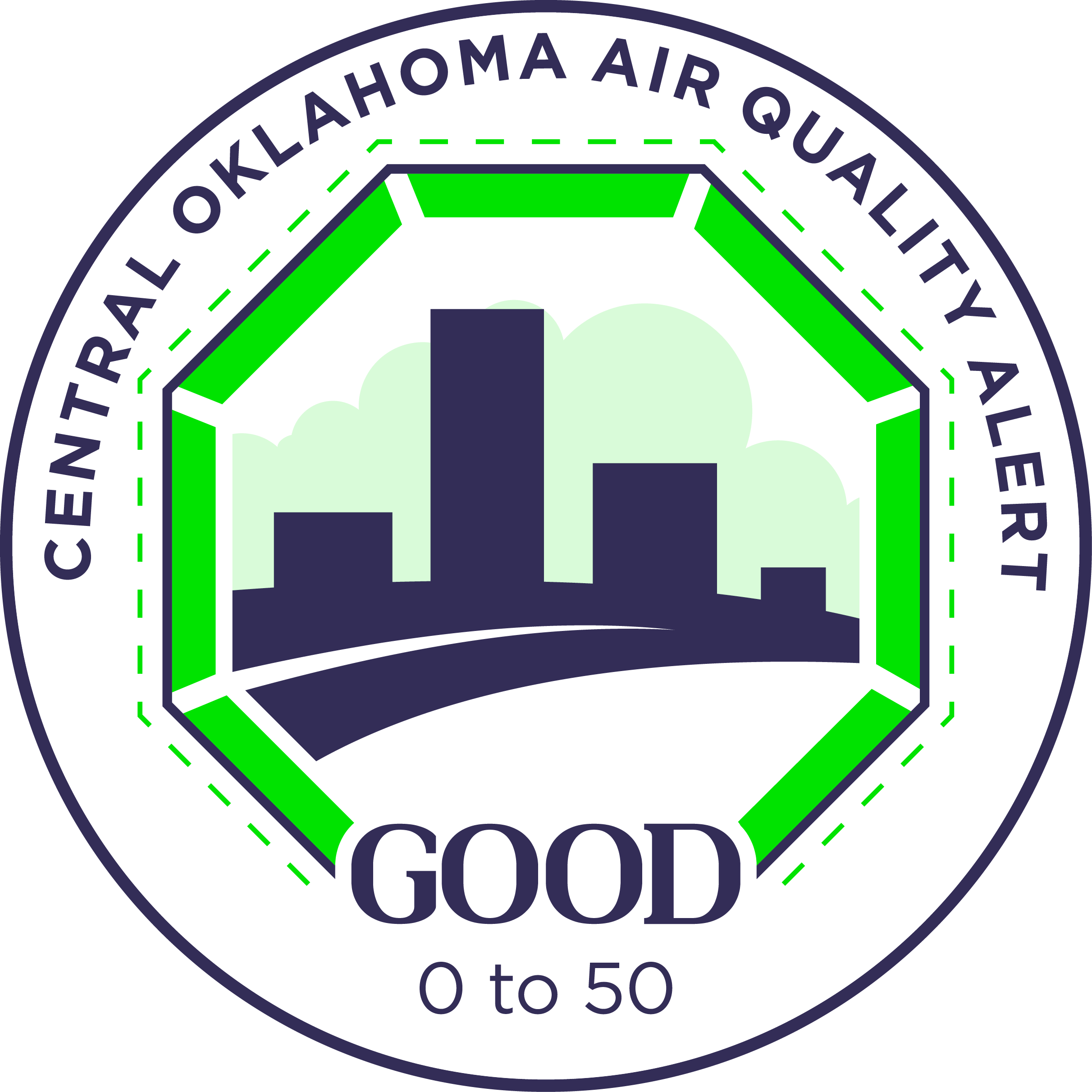
Level: Good
Air Quality is satisfactory. AQI: 0-50
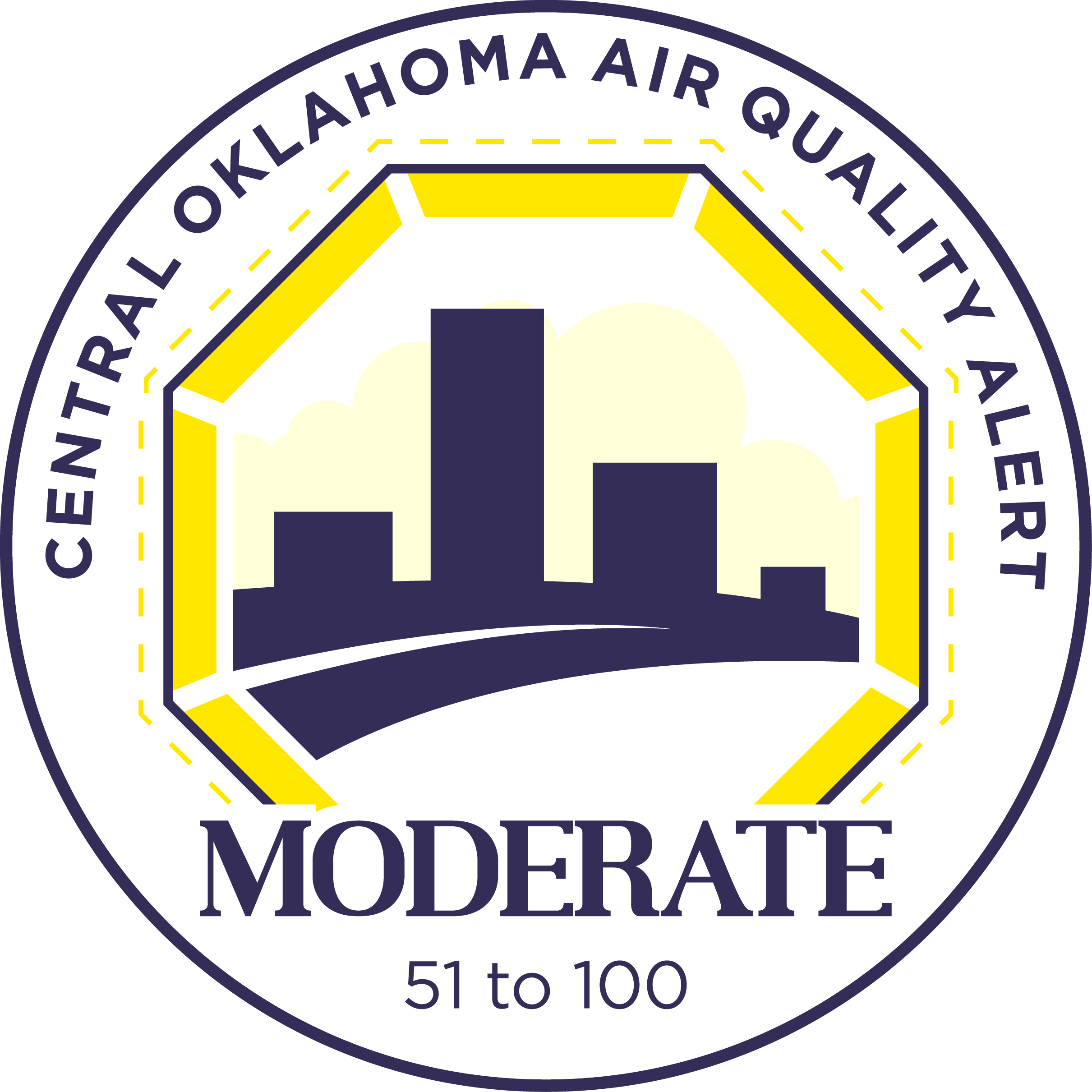
Level: Moderate
Acceptable, but some pollutants may affect sensitive individuals. AQI: 51-100
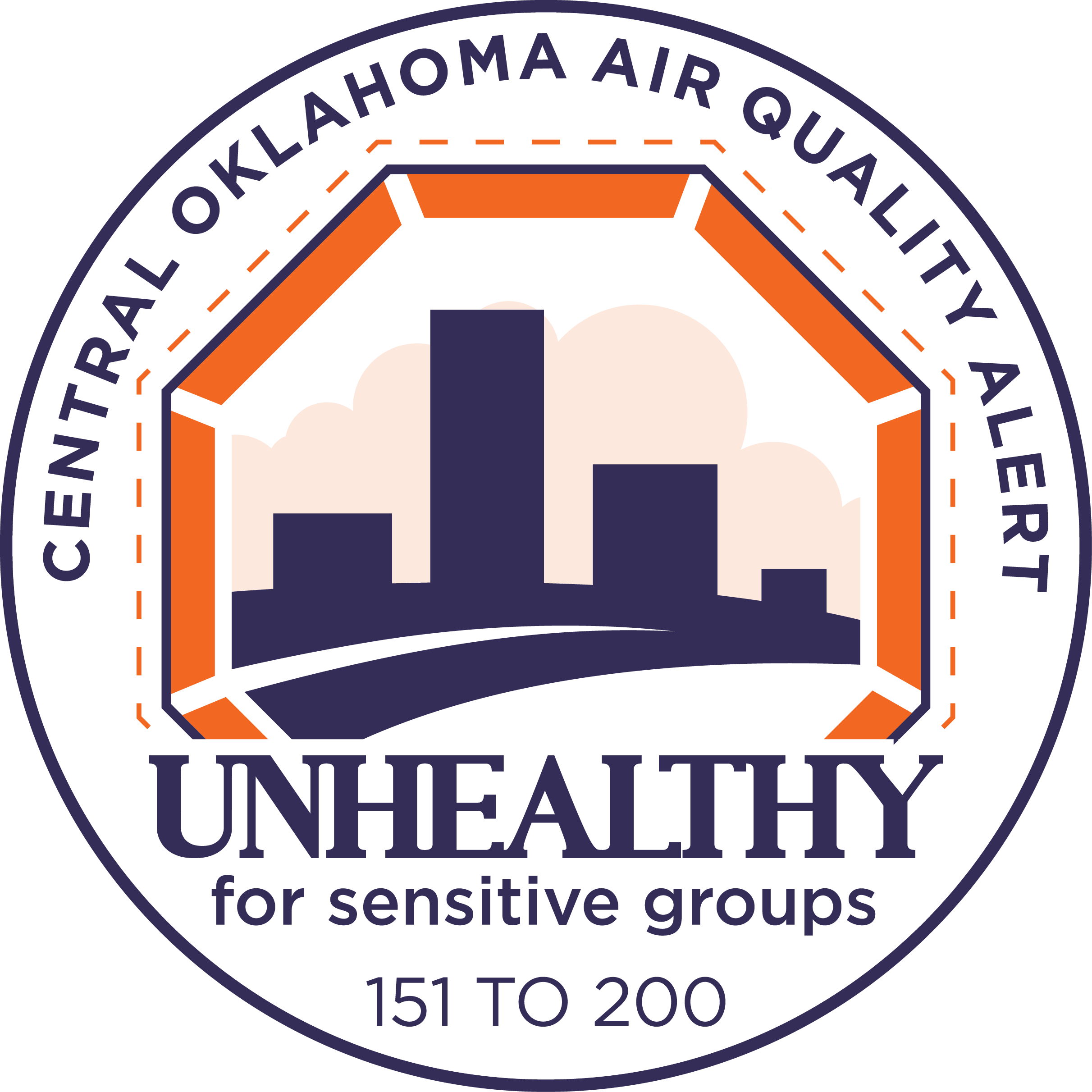
Level: Unhealthy for Sensitive Groups
Sensitive populations may experience effects. AQI: 101-150
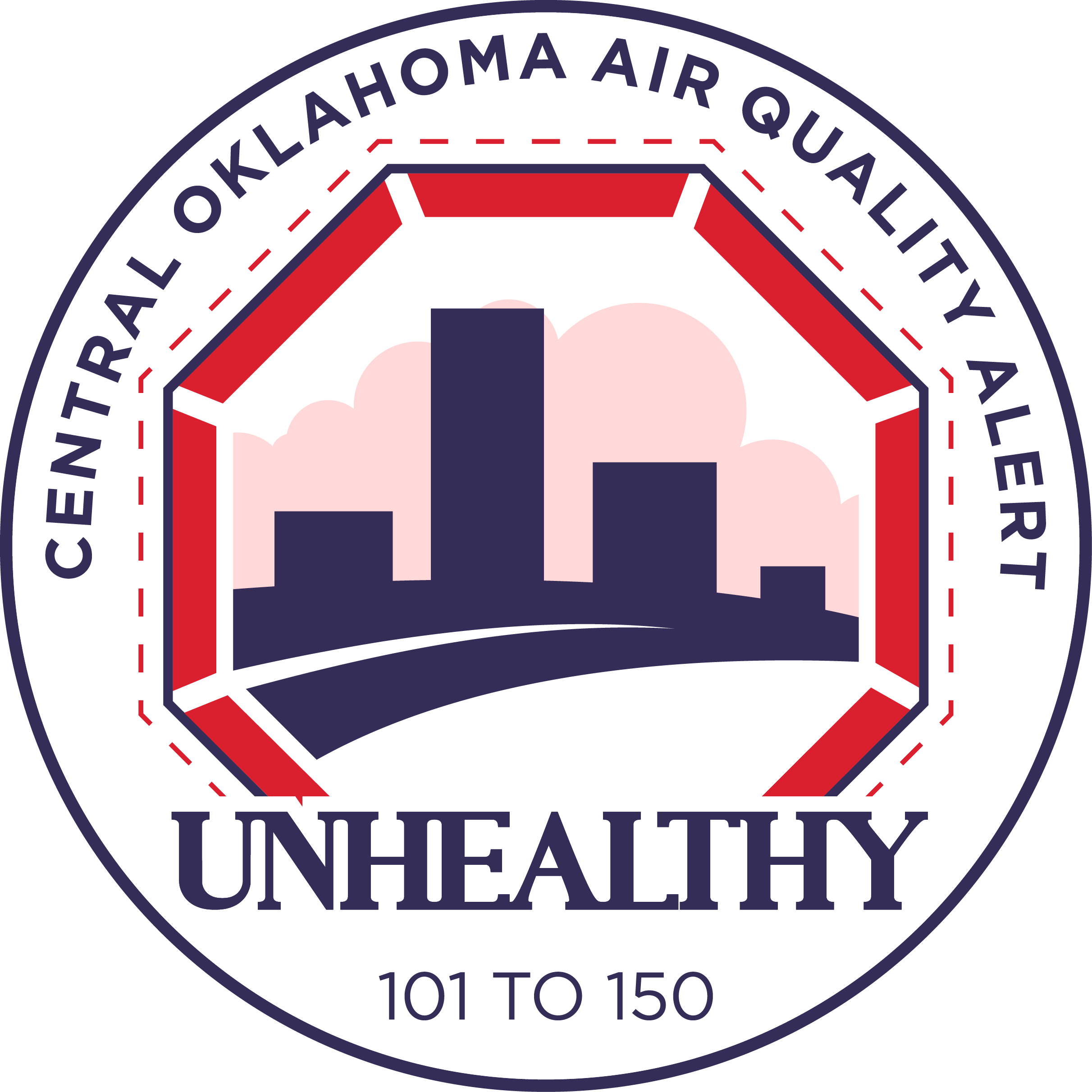
Level: Unhealthy
Everyone may begin to experience health effects. AQI: 151-200
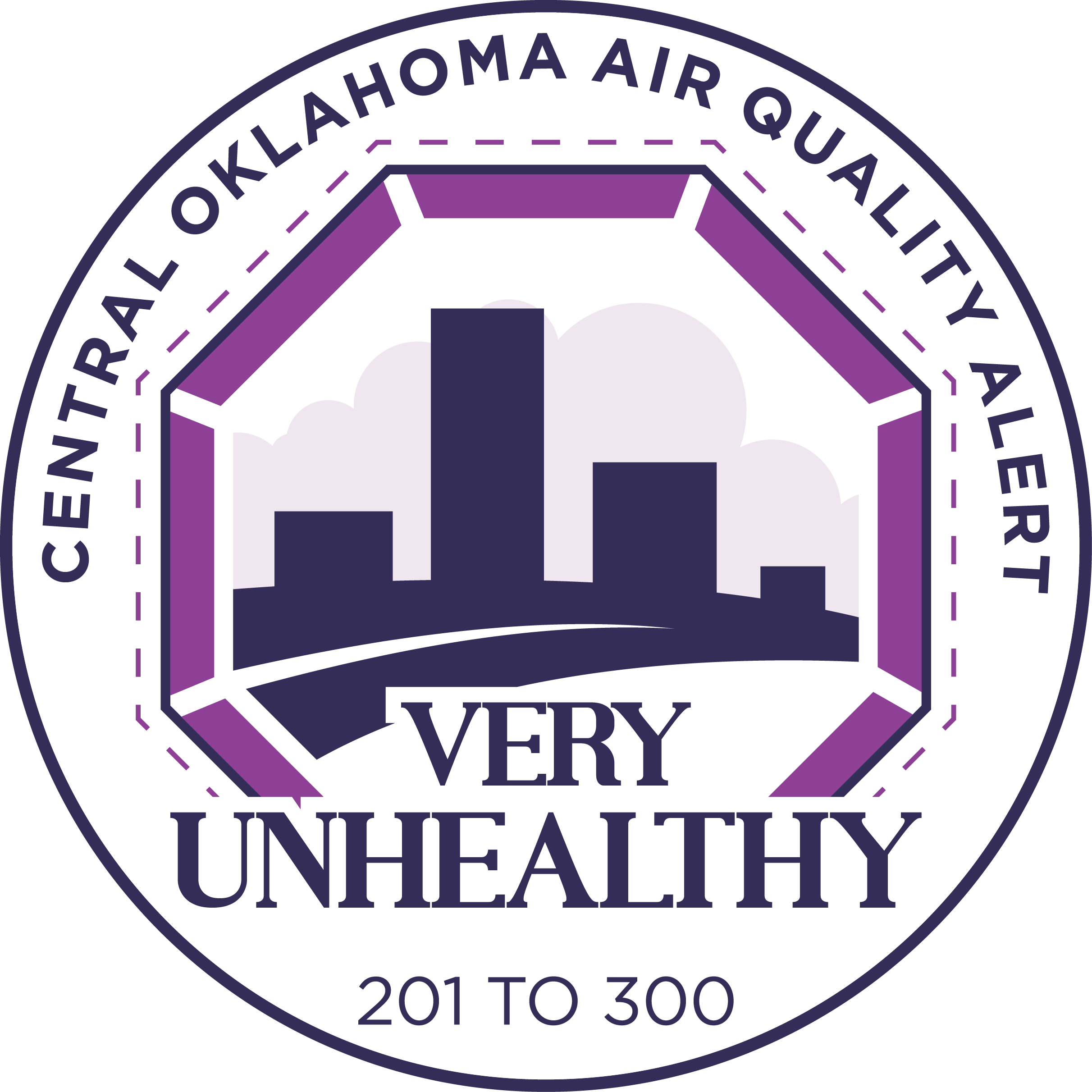
Level: Very Unhealthy
Health warnings for all residents. AQI: 201-300
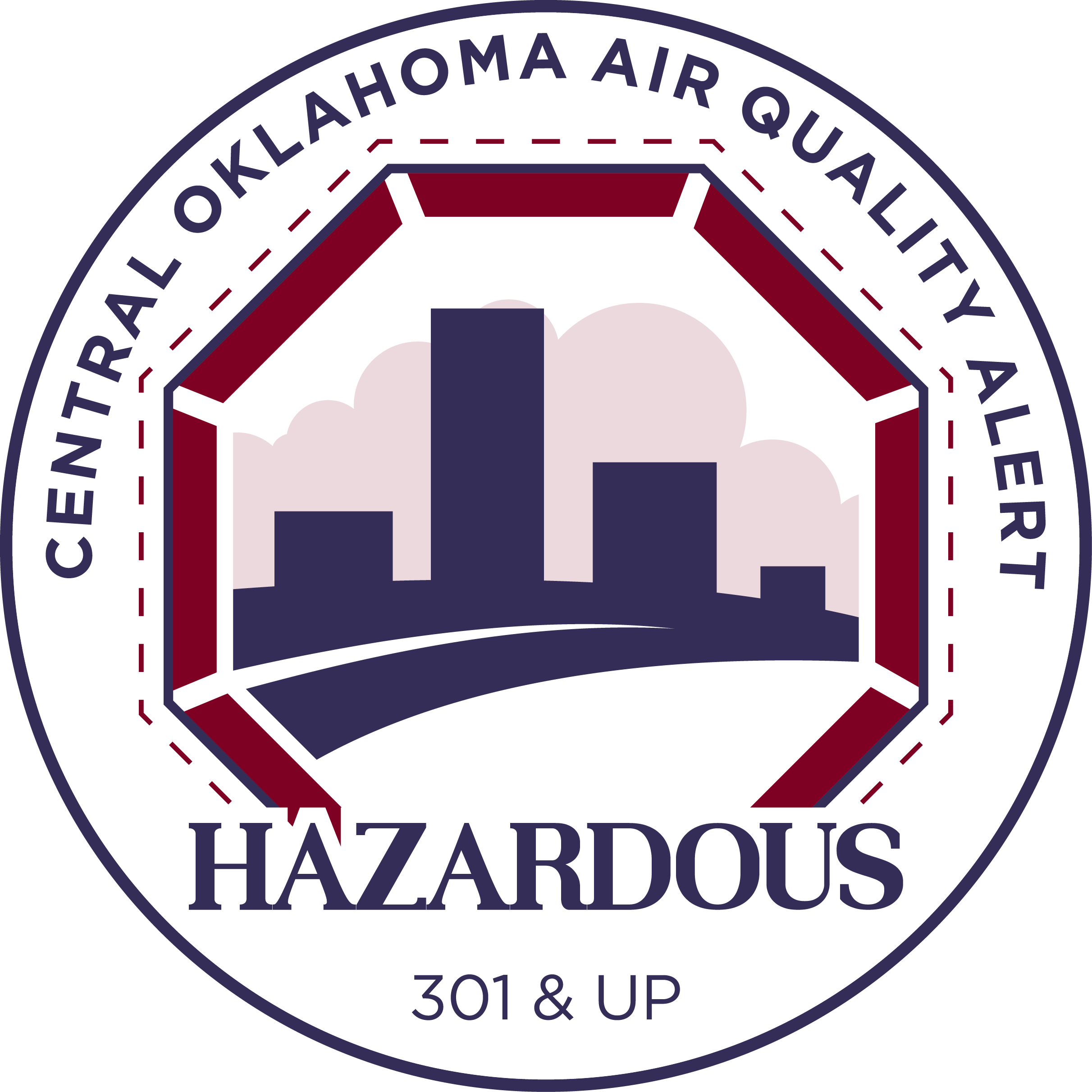
Level: Hazardous
Emergency Conditions. AQI: 301+
HEALTHy AIR RISK DAY TIPS
Help Your Fellow Oklahomans Breathe Easier
Cleaner Commute
Choose a cleaner commute; share a ride to work or use public transportation. Bicycle or walk to errands when possible.
Engine Idling
Limit engine idling, avoid congested roadways and drive-thrus. Delay your errands and reduce vehicle trips.
Refueling
Refuel vehicles after dusk.
Conserve Energy
Conserve electricity and set your air conditioner to a higher temperature. Pre-cool your home during non-peak hours.
Outdoor Activities
Delay gas-powered lawn mowing and landscape maintenance. Avoid outdoor burning. Abstain from using higher VOC household chemicals and paints.
CENTRAL OKLAHOMA AIR QUALITY ALERT HISTORY

For more in-depth information on past Central Oklahoma Ozone Alert Days (dating back to 2002), please complete an Open Records Request.
Contact Air Quality Staff
Association of Central Oklahoma Governments
(405) 234-2264
Office Address
4205 N. Lincoln Blvd.
Oklahoma City, OK 73105
8:30 AM – 5:00 PM | M-F
Contact Us
Speak Up Central OK
Civil Rights-Title VI
Accessibility Statement
Privacy Policy